Tramadol is a commonly prescribed medication used to manage moderate-to-severe pain. It is available under brand names like Conzip, Ultram, and Ryzolt.
Painkillers such as Tramadol have a half-life of about 6 to 8 hours, meaning the drug concentration reduces by half during that time. While many medications leave the body within a day, Tramadol can remain in your system for up to 40 hours (nearly 2 days).
Understanding Tramadol Half-Life
The half-life determines how long a drug stays active in the body.
What Does Half-Life Mean?
- Time required for the drug concentration to reduce by half
- For Tramadol: approximately 6–8 hours
Total Elimination Time
- Typically 4–5 half-lives needed
- Tramadol may remain detectable for up to 40 hours
How Tramadol Works in the Body
Mechanism of Action
Tramadol works by:
- Binding to opioid receptors
- Increasing serotonin and norepinephrine levels
This helps reduce how the brain perceives pain signals.
Immediate Release vs Extended Release
Immediate Release (IR)
- Works within 1 hour
- Peak effect in 2–3 hours
Extended Release (ER)
- Slower absorption
- Long-lasting effects
- Used for chronic pain management
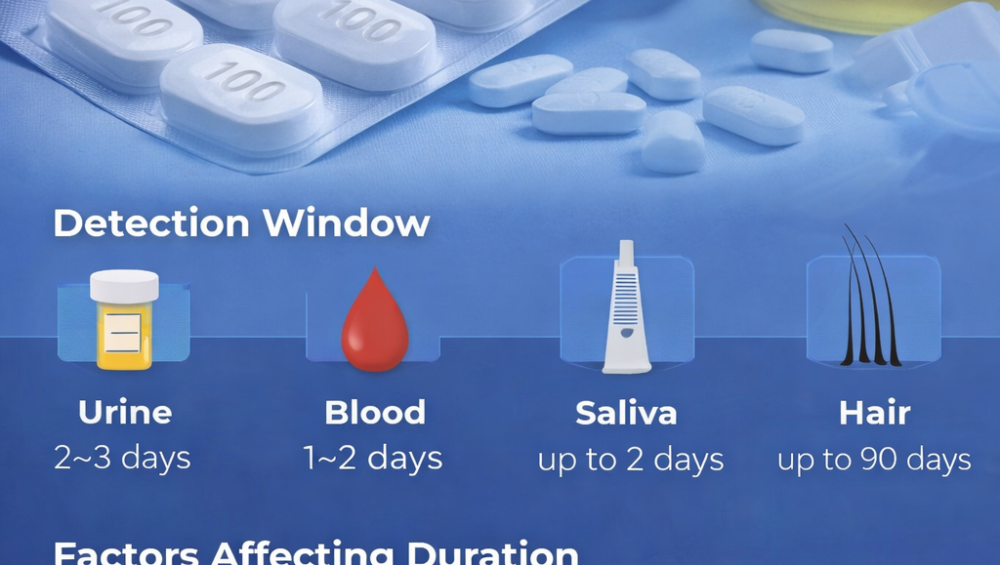
How Long Is Tramadol Detectable?
Detection varies based on the test type.
Urine Test
- Detectable for 2–3 days (up to 72 hours)
- Most common testing method
Blood Test
- Detectable for 1–2 days (sometimes up to 3 days)
- Less commonly used
Saliva Test
- Detectable for up to 2 days
- Easy and non-invasive
Hair Test
- Detectable for up to 90 days
- Most accurate long-term detection
Factors That Affect How Long Tramadol Stays in Your System
Dosage
Higher doses take longer to eliminate from the body.
Age
- Older adults process drugs more slowly
- Liver and kidney function impact metabolism
Method of Administration
- Tablets: slower absorption
- Injections: faster processing
Genetics
- Enzyme CYP2D6 affects metabolism speed
- Some people process Tramadol faster or slower
Other Medications & Substances
- Alcohol can slow metabolism
- Antidepressants may affect breakdown speed
How to Remove Tramadol from Your System
- No instant method to flush it out
- Drinking water or exercise does NOT remove it quickly
- The only way is to stop taking the medication
⚠️ Withdrawal symptoms may begin within 8–24 hours
Tramadol Withdrawal Symptoms
Early Symptoms
- Anxiety
- Sweating
- Runny nose
- Muscle aches
Peak Symptoms
- Nausea and vomiting
- Diarrhea
- Insomnia
- Increased heart rate
Long-Term Symptoms
- Depression
- Fatigue
- Cravings
When to Seek Medical Help
If you experience:
- Severe withdrawal symptoms
- Signs of dependence
- Difficulty stopping the medication
👉 Consult a healthcare professional immediately.
Conclusion
Tramadol can remain in your system for up to 40 hours, but detection times vary based on multiple factors like dosage, metabolism, and test type.
Understanding how it works and how long it stays in your body helps ensure safe and responsible use.